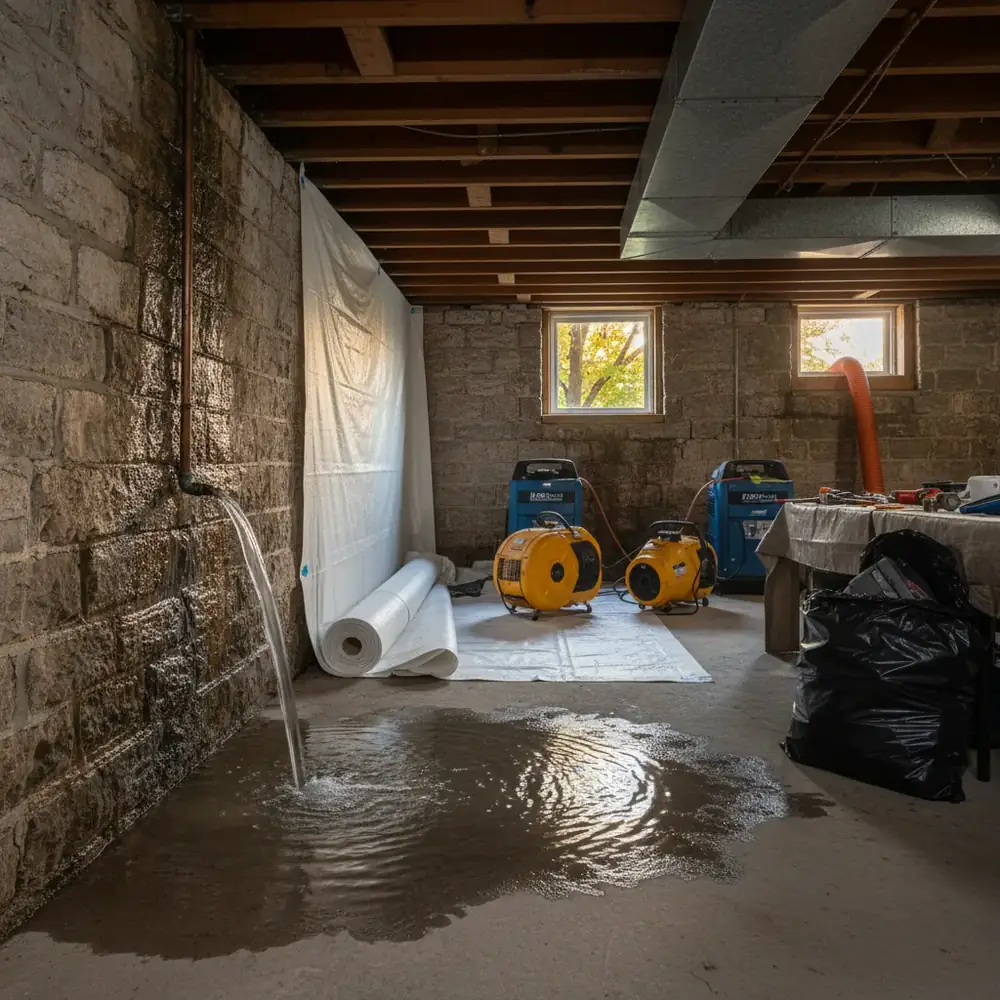
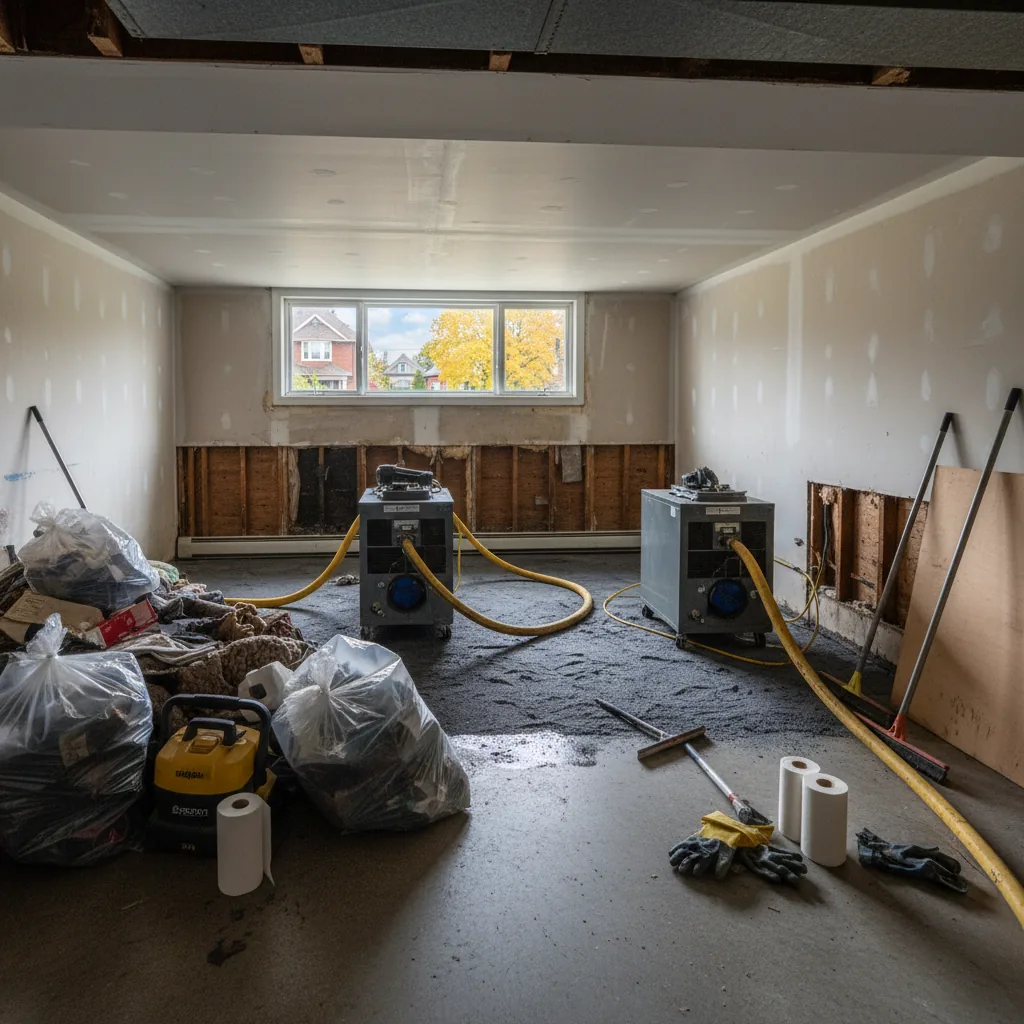
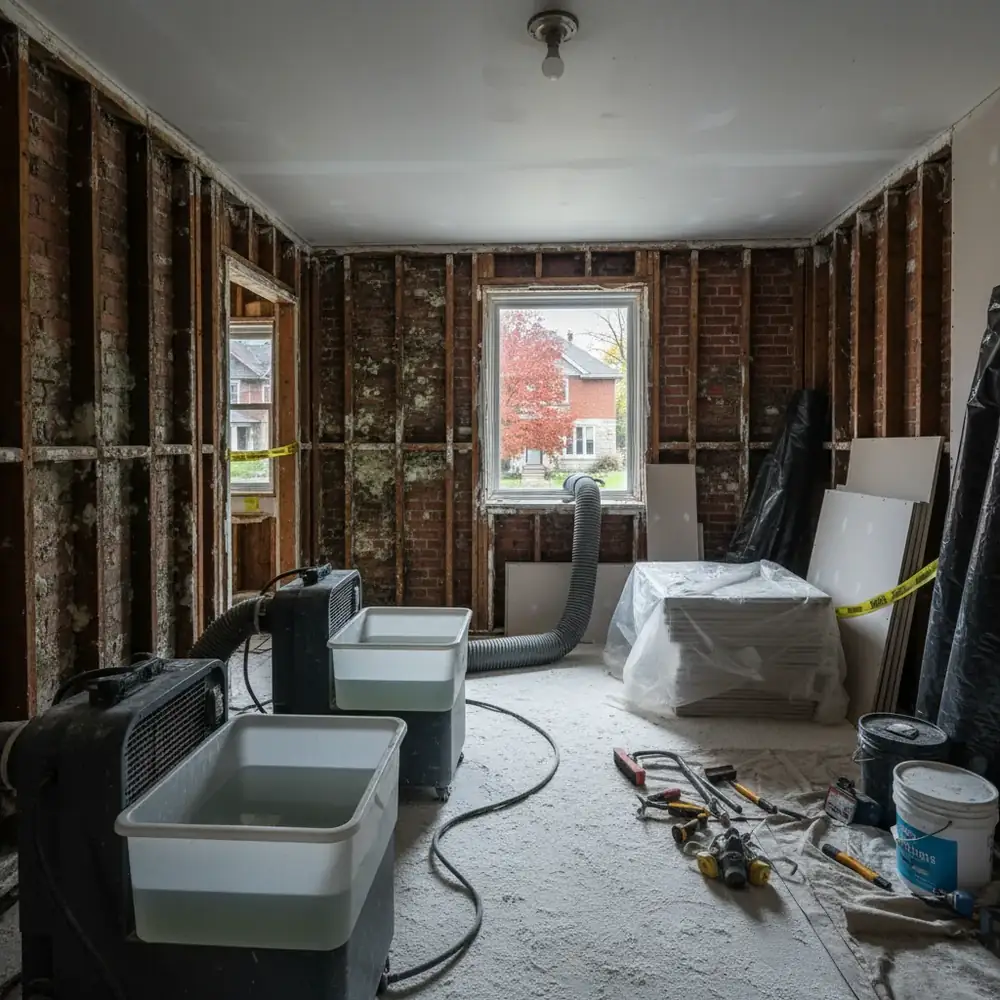
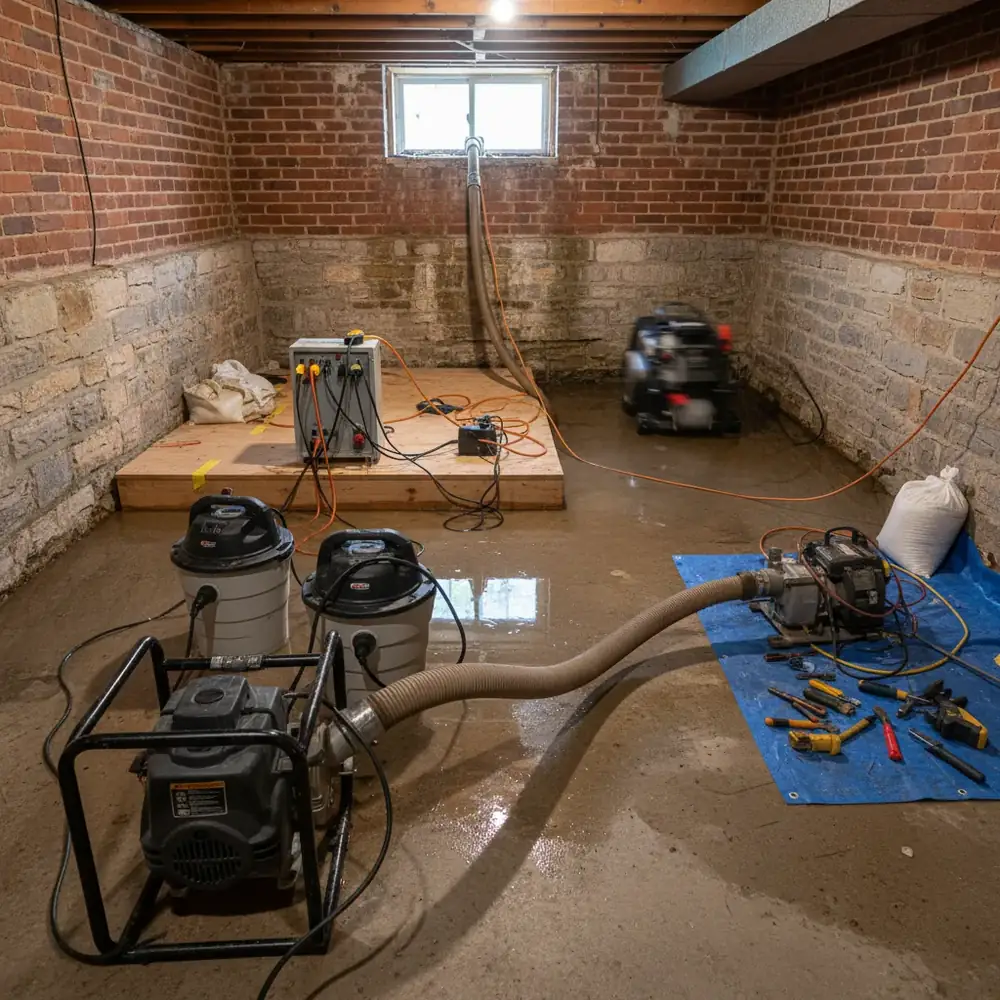
The first 24–48 hours decide whether a flood is a cleanup or a mould problem. We extract water, dry the structure with commercial equipment, and document everything for your insurance claim — day or night.
Get Emergency HelpCertified structural drying, not just fans on wet carpet. Moisture readings taken and logged at every visit so you know the job is actually done.
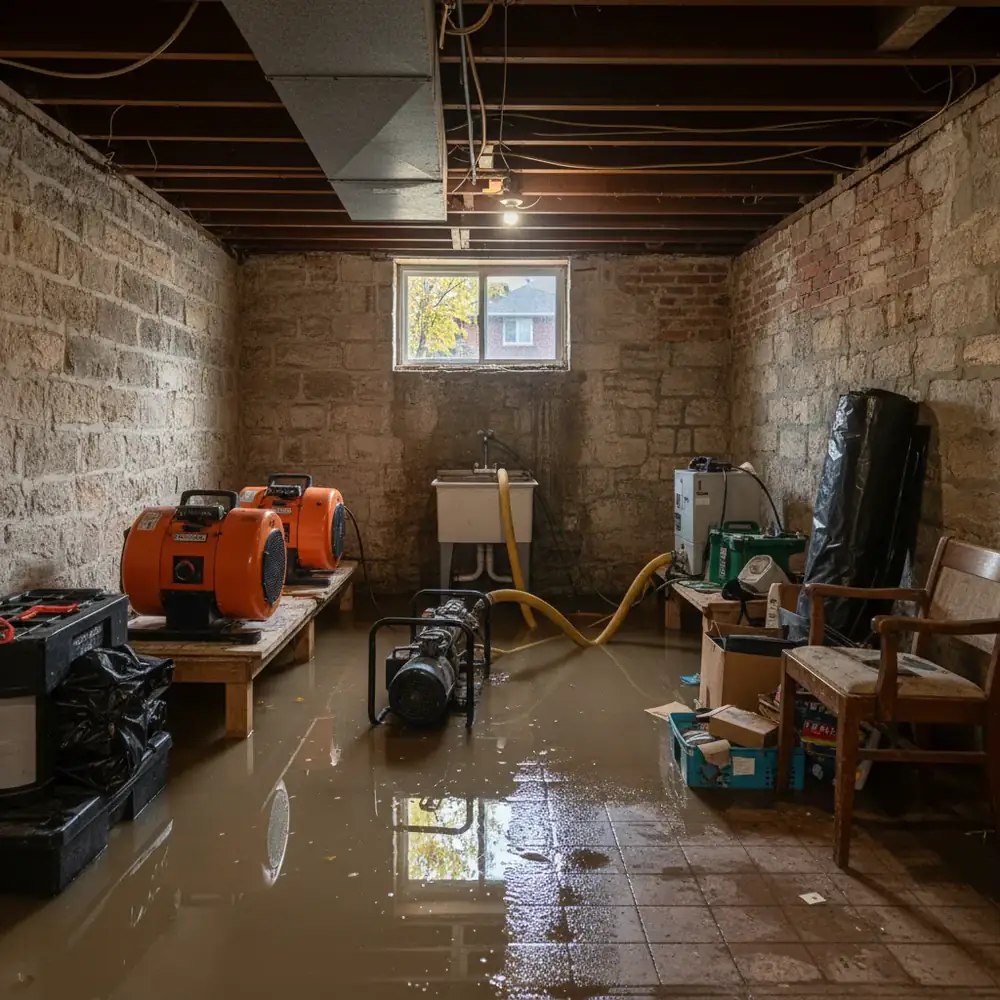
Extraction, tear-out of unsalvageable materials, and verified structural drying — the full sequence, fast.
Supply line failures, frozen pipe bursts and slow hidden leaks — found, stopped and dried properly.
Category 3 contamination handled with proper PPE, containment, disinfection and disposal — not a shop-vac job.
Containment, removal and clearance of mould from past floods, chronic leaks and damp basements — mould and mold, we cover both spellings and the real problem.
Pump-failure floods cleaned up fast — plus the backup-pump guidance that stops round two.
Water spreads sideways and down — fast. Drywall wicks it two feet up from the floor, and mould colonies can establish in 24–48 hours in a Guelph summer. The difference between a $3,000 dry-out and a $20,000 gut-and-rebuild is usually how fast extraction and drying started.
Guelph's housing stock makes this worse: older homes near downtown and the Ward have stone foundations that seep in spring melt, and newer subdivisions south of Clair Rd. rely on sump pumps that fail exactly when the power does. We see both, weekly.
We serve: Guelph, Cambridge, Fergus, Elora, Rockwood, Puslinch, Guelph/Eramosa and surrounding Wellington County communities.
Sudden and accidental water damage (burst pipe, appliance failure) is usually covered. Sewer backup and overland flooding need specific endorsements many Guelph homeowners don't realize they're missing. We document everything either way and bill in a format adjusters accept.
Typical structural drying runs 3–5 days with commercial dehumidifiers and air movers, verified by moisture meter readings — not guesswork. Saturated hardwood or plaster can take longer.
Extract standing water if you safely can, but household fans alone push humid air around and can spread moisture into wall cavities. The critical steps are extraction, removing what can't be saved, and controlled dehumidification.
Yes — containment, removal of affected materials, HEPA cleaning and clearance. If a previous flood was dried badly, that's the most common source we find.
Stop the source (water shut-off or breaker for the sump circuit), move valuables up off the floor, photograph everything before touching it, and call us. Don't enter standing water near electrical outlets or panels.
Tell us about the job and we'll get back to you within one business day.